Catalytic Leaching and the Second Life of Gold Tailings
Published: March 2026
Author: Kartik Singh
Category: Recovery
Read time: 9 minutes
Introduction
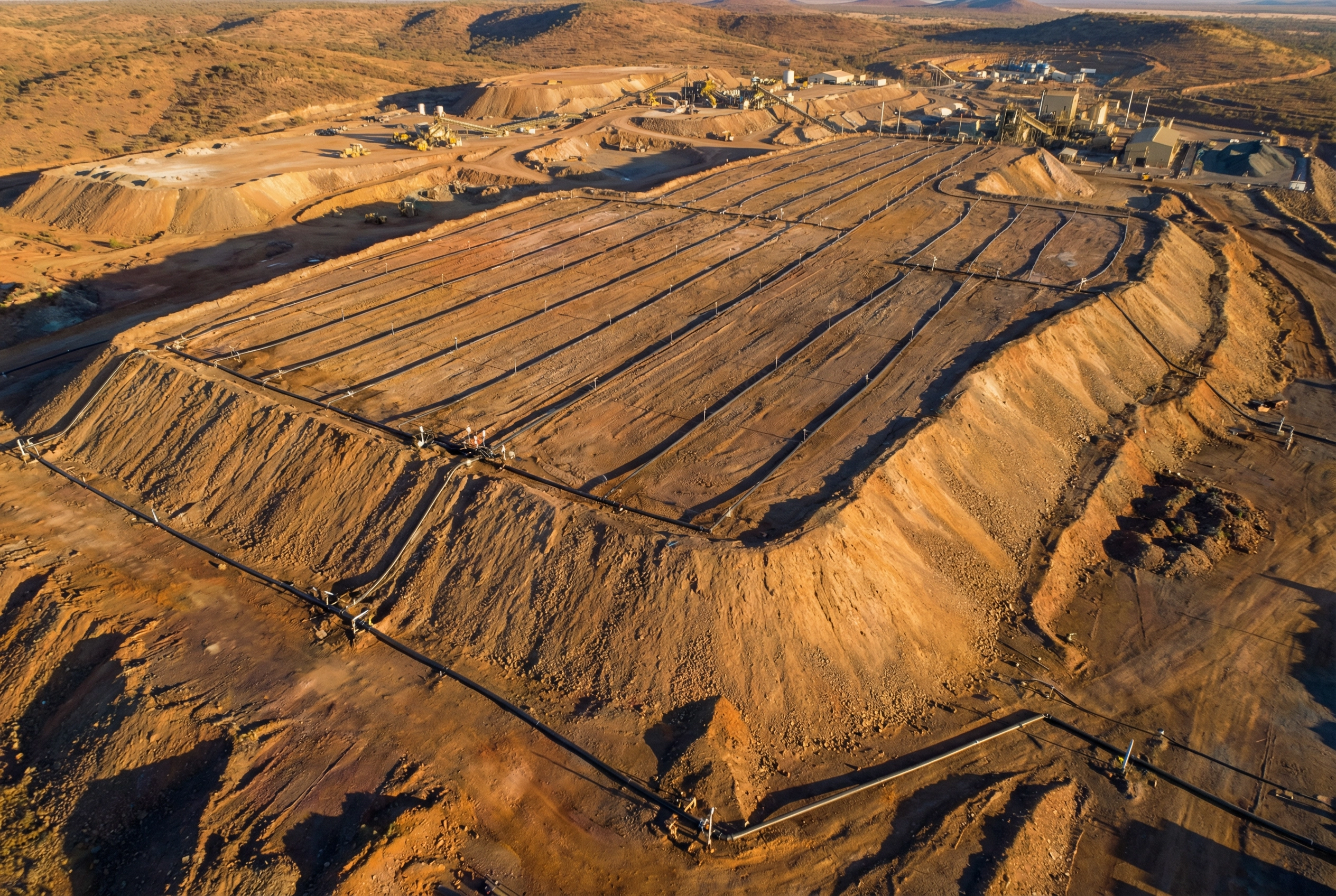
For much of the twentieth century, gold tailings were considered a closed chapter — residues left behind after the economic ore had been extracted, destined for permanent storage in tailings storage facilities (TSFs). That assumption is now being fundamentally challenged. Advances in catalytic and alternative leaching technologies are unlocking gold concentrations in tailings that were previously too low to justify reprocessing, transforming legacy waste into a genuine secondary resource.
This post examines the science behind catalytic leaching, explores the key technologies driving the gold tailings reprocessing revolution, and profiles global projects that are demonstrating its commercial viability.
Why Gold Tailings Still Contain Value
Historical gold processing was constrained by the technology available at the time. Conventional cyanide leaching, the dominant process for most of the twentieth century, typically achieved gold recoveries of 85–92% from primary ore. The remaining 8–15% — representing millions of ounces of gold across legacy TSFs globally — was either locked in refractory minerals, too finely disseminated to be liberated, or present at concentrations too low to justify the cost of additional processing.
Three factors have converged to make gold tailings reprocessing economically attractive today:
Rising gold prices have elevated the economic threshold at which low-grade tailings become viable. At gold prices above USD 1,800/oz, tailings with concentrations as low as 0.3–0.5 g/t can generate positive returns when processed with modern, low-cost leaching technologies.
Improved metallurgical understanding has revealed that many historical tailings contain gold in forms that were not amenable to conventional cyanide leaching — including gold locked in pyrite, arsenopyrite, and carbonaceous matter. New pre-treatment and leaching approaches can liberate this locked gold.
Environmental and regulatory pressure on new greenfield mining has made reprocessing existing tailings — which already carry established environmental liabilities — an increasingly attractive alternative to developing new deposits.
The Technology Landscape: Beyond Conventional Cyanide
While cyanide leaching remains the workhorse of the gold industry, its limitations in tailings reprocessing have driven significant innovation. The most commercially significant alternatives are thiosulfate leaching and glycine leaching.
Thiosulfate Leaching
Thiosulfate (S₂O₃²⁻) is a non-toxic, biodegradable lixiviant that dissolves gold through an oxidative complexation reaction. The gold-thiosulfate complex (Au(S₂O₃)₂³⁻) is stable under mildly alkaline conditions, making the process suitable for tailings that contain carbonaceous matter — a major limitation of cyanide leaching, where carbonaceous material can adsorb dissolved gold before it can be recovered (the so-called "preg-robbing" effect).
The catalytic variant of thiosulfate leaching uses copper ions (Cu²⁺) as a catalyst to accelerate gold dissolution. The copper-ammonia-thiosulfate system, developed and commercialised by Barrick Gold at their Goldstrike operation in Nevada, achieves gold recoveries of 80–90% from carbonaceous ores and tailings that are essentially unresponsive to cyanide.
Key advantages of thiosulfate leaching include:
- Non-toxic reagent with low environmental risk
- Effective on carbonaceous and refractory tailings
- Suitable for operations in environmentally sensitive jurisdictions
- Lower reagent costs than cyanide in some formulations
Challenges include higher reagent consumption compared to cyanide, the need for careful pH and Eh control, and the complexity of gold recovery from the leach solution (conventional carbon adsorption does not work with thiosulfate; resin-in-pulp or direct electrowinning are required).
Glycine Leaching
Glycine leaching is a newer technology, developed primarily by researchers at Curtin University in Western Australia and commercialised through the company Glycine Leaching Technology (GLT). Glycine (NH₂CH₂COOH) is the simplest amino acid — cheap, non-toxic, biodegradable, and widely available as an industrial chemical.
In the presence of an oxidant (typically hydrogen peroxide or dissolved oxygen), glycine forms stable complexes with gold, silver, and copper. The gold-glycine complex is highly stable across a wide pH range, and the process is particularly effective on oxide ores and oxidised tailings.
The glycine leaching process has several notable characteristics:
- Extremely low toxicity — glycine is used as a food additive
- Effective at ambient temperature and pressure
- Selective for gold and silver over iron, reducing reagent consumption
- Compatible with existing carbon-in-leach (CIL) and carbon-in-pulp (CIP) gold recovery circuits
Pilot and commercial-scale trials have demonstrated gold recoveries of 75–95% from oxide tailings, with operating costs competitive with cyanide leaching in many scenarios.
Pressure Oxidation (POX) Pre-treatment
For refractory tailings where gold is locked within sulphide minerals (pyrite, arsenopyrite), pre-treatment is required before leaching. Pressure oxidation (POX) uses elevated temperature and pressure in an autoclave to oxidise the sulphide matrix, liberating the encapsulated gold for subsequent leaching.
POX pre-treatment followed by thiosulfate or cyanide leaching is now being applied to historical tailings at several operations globally, achieving gold recoveries of 85–95% from material that was previously unprocessable.
Global Case Studies: Gold Tailings Reprocessing in Action
DRDGOLD, Ergo Operation (South Africa)
DRDGOLD's Ergo operation in Johannesburg is one of the world's largest gold tailings reprocessing facilities. The operation processes approximately 1.2 million tonnes of tailings per month from historical TSFs across the Witwatersrand Basin — the world's most prolific gold-producing region.
Ergo uses a combination of hydraulic mining (to re-slurry the tailings), conventional milling, and carbon-in-leach (CIL) cyanide leaching to recover gold at grades of 0.2–0.4 g/t. The operation produces approximately 4,500–5,000 kg of gold annually, generating revenues of over USD 250 million per year. Critically, the reprocessing also rehabilitates the land footprint of the historical TSFs, with the processed tailings redeposited in a modern, engineered facility with improved environmental controls.
Pan African Resources, Elikhulu (South Africa)
Pan African Resources' Elikhulu tailings retreatment plant, commissioned in 2018, processes 1.2 million tonnes of tailings per month from the Evander Goldfields TSFs in Mpumalanga Province. The plant uses a high-pressure grinding roll (HPGR) circuit to improve gold liberation, followed by CIL leaching.
Elikhulu achieves gold recoveries of approximately 43% from tailings grading 0.27 g/t, producing around 56,000 oz of gold annually at an all-in sustaining cost (AISC) of approximately USD 850/oz — well below prevailing gold prices. The project demonstrates that even low-grade tailings can be economically viable when processed at sufficient scale with optimised technology.
Barrick Gold, Goldstrike (USA)
Barrick's Goldstrike operation in Nevada was the first commercial-scale application of thiosulfate leaching for gold recovery. The process was developed specifically to address the carbonaceous, refractory nature of the Goldstrike ore and tailings, which caused severe preg-robbing losses with conventional cyanide leaching.
The thiosulfate circuit, which uses a copper-ammonia catalyst system, achieves gold recoveries of 85–90% from material that yielded only 30–40% recovery with cyanide. The technology has since been refined and is being evaluated for application at other Barrick operations globally.
Glycine Leaching Pilots (Australia)
Multiple gold producers in Western Australia are conducting pilot-scale trials of glycine leaching on historical tailings. Operations at Kalgoorlie and the Murchison region have demonstrated gold recoveries of 80–92% from oxide tailings grading 0.3–0.8 g/t, with operating costs of USD 15–25 per tonne of tailings processed.
Economic and Environmental Dimensions
The economics of gold tailings reprocessing are compelling when conditions align. The table below summarises indicative parameters for the key technologies:
| Technology | Typical Recovery | Operating Cost (USD/t) | Best Suited For |
|---|---|---|---|
| Cyanide CIL/CIP | 75–92% | 8–18 | Oxide, free-milling tailings |
| Thiosulfate (catalytic) | 80–90% | 20–35 | Carbonaceous, refractory tailings |
| Glycine leaching | 75–95% | 15–25 | Oxide, partially oxidised tailings |
| POX + cyanide/thiosulfate | 85–95% | 35–60 | Sulphide-locked, refractory tailings |
Beyond gold recovery, tailings reprocessing delivers significant environmental co-benefits. Reprocessing historical TSFs reduces the long-term liability associated with acid mine drainage (AMD), heavy metal leaching, and dust generation. Modern reprocessing operations typically incorporate improved water management, dust suppression, and tailings redeposition in engineered facilities with better geotechnical and environmental performance than the original storage.
For civil engineers, the rehabilitation dimension of tailings reprocessing is particularly significant. Reprocessing effectively converts a legacy liability — a TSF that may require monitoring and maintenance for decades — into a rehabilitated landform that can be progressively returned to productive use.
The Circular Mining Economy: Implications for the Industry
The emergence of economically viable gold tailings reprocessing is a concrete manifestation of circular economy principles in the mining sector. Rather than treating tailings as a permanent waste stream, reprocessing closes the loop — recovering value from material that was previously considered exhausted, reducing the environmental footprint of historical operations, and generating revenue that can fund rehabilitation.
For junior and mid-tier gold producers, historical TSFs increasingly represent a strategic asset rather than a liability. Companies that can demonstrate technically and economically viable reprocessing pathways for their tailings portfolios may find that these assets are valued by investors and acquirers — a significant shift from the traditional view of TSFs as a cost centre.
The technology trajectory is also encouraging. As thiosulfate and glycine leaching processes mature, costs are expected to decline and recoveries to improve. Combined with rising gold prices and tightening environmental regulations on new greenfield development, the conditions for a sustained expansion of gold tailings reprocessing are firmly in place.
Conclusion
Catalytic and alternative leaching technologies are fundamentally changing the economics of gold tailings reprocessing. What was once considered exhausted waste is increasingly recognised as a secondary resource — one that can generate significant revenue, reduce environmental liabilities, and contribute to the rehabilitation of historical mining landscapes.
For civil engineers and mining professionals working in tailings management, understanding these technologies is becoming essential. The second life of gold tailings is not a distant prospect — it is happening now, at scale, across multiple continents. The question is not whether tailings reprocessing will become mainstream, but how quickly the industry will move to capture the opportunity.