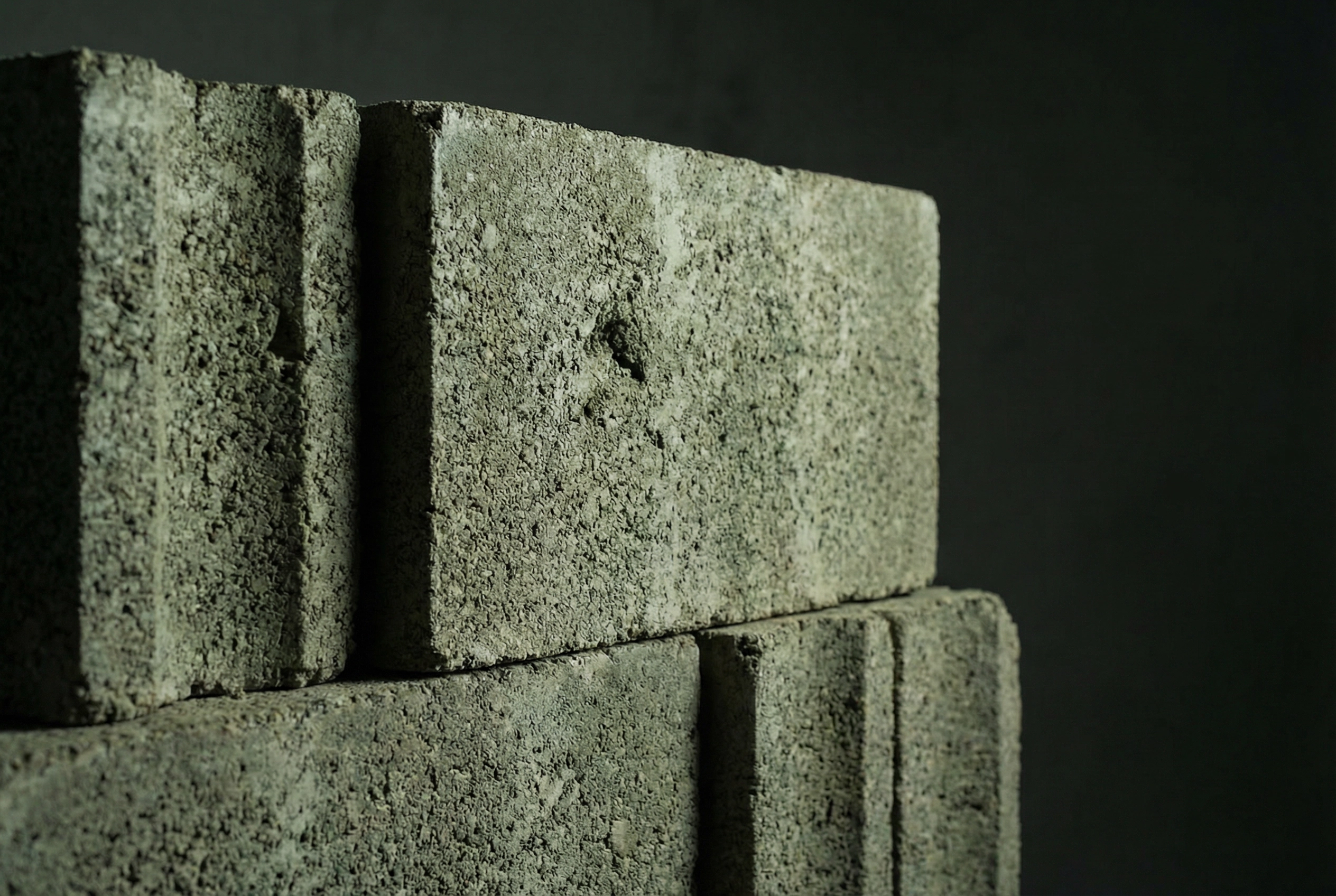
Geopolymerization: Turning Mine Tailings into Durable Construction Materials
Published: April 2026
Author: Kartik Singh
Category: Technology
Read time: 8 minutes
Introduction
Among the emerging technologies for tailings reuse and repurposing, geopolymerization stands out as a particularly promising approach. Unlike traditional cement-based construction materials, geopolymers are inorganic polymers synthesized through an alkali-activation process that can transform mine tailings—especially those rich in aluminosilicate minerals—into durable, low-carbon building materials.
This post explores what geopolymerization is, how it works, why it matters for tailings management, and where the technology is being deployed globally.
What is Geopolymerization?
Geopolymerization is a chemical process that converts aluminosilicate minerals (such as fly ash, slag, or tailings) into a solid, three-dimensional network of Si-O-Al bonds. The process begins with an alkali-activation step, where a precursor material (the tailings or waste) is mixed with an alkaline solution, typically sodium hydroxide (NaOH) or potassium hydroxide (KOH), often combined with sodium silicate (Na₂SiO₃).
The resulting geopolymer is a ceramic-like material with properties comparable to conventional Portland cement concrete, but with a fundamentally different chemistry and production pathway. Rather than the high-temperature calcination required for Portland cement (which generates significant CO₂ emissions), geopolymerization occurs at ambient or moderately elevated temperatures, making it inherently lower in embodied carbon.
How Geopolymerization Works: The Chemistry
The geopolymerization reaction proceeds in several stages:
1. Dissolution Phase
The aluminosilicate precursor (tailings) is exposed to the alkaline activator, which breaks down the mineral structure and releases reactive silica (SiO₂) and alumina (Al₂O₃) species into solution.
2. Condensation Phase
The dissolved silica and alumina species polymerize, forming Si-O-Al and Si-O-Si bonds. This creates a three-dimensional amorphous or semi-crystalline network.
3. Hardening Phase
Over time (hours to days), the geopolymer matrix hardens and gains strength through continued condensation reactions and the formation of additional cross-links.
The final product is a solid, durable material with compressive strengths typically ranging from 40 to 100 MPa—comparable to conventional concrete. The material is also resistant to chemical attack, fire, and thermal cycling, making it suitable for demanding applications.
Why Tailings Matter for Geopolymerization
Mine tailings are particularly well-suited for geopolymerization for several reasons:
Mineral Composition
Many tailings contain high concentrations of aluminosilicate minerals (feldspars, micas, quartz) that are ideal precursors for geopolymer synthesis. Tailings from copper, gold, and polymetallic mines often have suitable mineralogy.
Waste Valorization
Rather than storing tailings indefinitely in surface facilities, geopolymerization offers a pathway to convert waste into a valuable product. This reduces long-term storage liability and creates economic value.
Scale
The sheer volume of tailings generated globally—estimated at over 7 billion tonnes annually—means that even modest adoption of geopolymerization technology could absorb significant quantities of waste.
Environmental Benefits
Geopolymerization typically generates 40–60% lower CO₂ emissions compared to Portland cement production, depending on the alkaline activator used and the energy sources involved.
Global Examples: Where Geopolymerization is Being Deployed
SETELIT Project (Finland)
The SETELIT initiative, conducted in partnership with European research institutions, is exploring the use of polymetallic mine tailings to produce geopolymer materials. The project includes research into 3D printing applications, where geopolymer paste is used to construct building elements layer by layer. Early results show that tailings-based geopolymers can achieve compressive strengths of 50–80 MPa and exhibit good durability in accelerated weathering tests.
Polish Copper Slag Initiative (Poland)
Researchers at Polish technical universities have developed processes for converting copper smelter slag into geopolymer bricks and architectural elements. The slag is activated with sodium hydroxide and sodium silicate to produce high-strength building blocks. Pilot production has demonstrated technical feasibility and cost competitiveness with conventional concrete bricks.
Australian Research (RMIT and University of Technology Sydney)
Academic groups in Australia have investigated the use of gold and base-metal tailings for geopolymer synthesis. Studies show that tailings from operations in Western Australia and Queensland can be successfully converted into geopolymers with compressive strengths exceeding 60 MPa.
Canadian Initiatives
Research institutions in British Columbia and Ontario are collaborating with mining companies to evaluate geopolymerization as a pathway for tailings reuse, focusing on zinc, copper, and polymetallic operations.
Advantages and Challenges
Geopolymerization offers compelling advantages: 40–60% lower CO₂ than Portland cement, excellent chemical and fire resistance, and the ability to absorb millions of tonnes of tailings annually. However, challenges remain around material variability between mine sites, the cost of alkaline activators, the absence of established building codes for geopolymers in most jurisdictions, and the need for large-scale demonstration projects to build market confidence.
Conclusion
Geopolymerization represents a compelling pathway for transforming mine tailings from a liability into a valuable resource. As the construction industry intensifies its focus on decarbonization and circular economy principles, tailings-based geopolymers are likely to play an increasingly important role. For civil engineers working in mining, this technology deserves serious attention as a tool for reimagining how mining waste can contribute to the built environment.